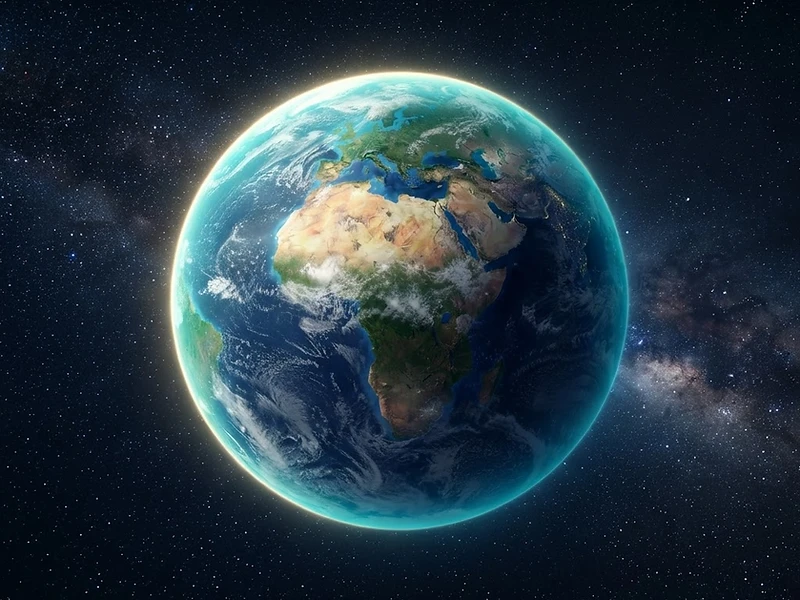
The 1.5°C Threshold: Why Our Climate Doomsday Clock Just Ticked Forward
Global temperatures have officially breached the critical 1.5°C threshold. Here is what the latest data tells us about the state of our planet.
The Clock Strikes Closer to Midnight
As of November 2026, the global scientific community has issued a sobering update: we have officially breached the critical 1.5°C warming threshold. This isn't just a number in a report; it is a signal that our climate system is entering uncharted and increasingly volatile territory. At The Climate Signal, our Doomsday Clock reflects this reality, ticking closer to midnight as our live indicators reveal the cumulative pressure on our Earth's systems.
The Data Behind the Danger
According to data from NASA GISS, the current Global Surface Temperature Anomaly has reached 1.38°C above the 1951-1980 baseline. While this figure fluctuates, the broader trend is unmistakably rising. This warming is the engine driving a cascade of other environmental crises:
- Greenhouse Gas Concentration: Atmospheric CO2, as measured by NOAA Mauna Loa, stands at 426.07 ppm, a high that continues to trap heat. Even more concerning is the spike in Methane (CH4), which has reached 1934.57 ppb according to NOAA GML. Methane acts as a potent, short-lived greenhouse gas, accelerating our near-term warming.
- Biodiversity in Crisis: The natural world is buckling under this pressure. The Species Extinction Rate is now 100 times the background rate, per the IUCN Red List. Furthermore, Pollinator Decline has reached -40% since the baseline, threatening the foundation of global food security.
- Land and Forest Health: We are seeing a significant rise in Desertification, covering 40 M km² of land (UNCCD), while Boreal Forest Loss has hit 1.2 M ha, according to Global Forest Watch, further reducing the planet's capacity to store carbon.
Why This Matters Now
This week, as the world gathers in Antalya, Türkiye, for COP31, the mood is understandably tense. The WMO’s latest State of the Climate update confirms that the window to prevent the worst impacts of climate change is narrowing. We aren't just talking about abstract numbers; we are witnessing immediate, localized devastation, such as the fatal flooding recently reported in Corsica.
When global mean sea levels rise at a rate of 2.77 mm/yr (CU Sea Level), it isn't just a statistical anomaly—it is a direct threat to coastal communities, infrastructure, and the millions of people who call these zones home. The combination of rising temperatures, biodiversity loss, and atmospheric pollution creates a feedback loop that makes every fraction of a degree increasingly dangerous.
What Can Be Done?
It is easy to feel overwhelmed by these figures, but the data also highlights areas of hope. For instance, reforestation efforts are currently sequestering carbon at a rate of 10 M ha/yr (FAO), and 17% of the world's land is now protected (UNEP-WCMC). These efforts demonstrate that when we act, we can make a measurable difference.
To move the clock away from midnight, we must transition from passive observation to active engagement. This means demanding policies that address the root causes of these indicators—specifically the reduction of methane and CO2 emissions—and supporting ecosystem restoration.
Knowledge is your first line of defense. By staying informed about the live indicators that define our world, you can better understand the urgency of the climate crisis. Explore our interactive, real-time data dashboard at www.theclimatesignal.com to see exactly how these indicators are shifting today.
Frequently Asked Questions
What does the 1.5°C threshold represent?
The 1.5°C threshold is a critical target set by the Paris Agreement to limit the most catastrophic impacts of global warming. Breaching this level, as indicated by recent reports from the Union of Concerned Scientists, suggests an increased risk of extreme weather events and irreversible ecosystem damage.
Why is methane (CH4) considered such a major risk?
Methane is a highly potent greenhouse gas with a much stronger warming effect than CO2 in the short term. According to NOAA GML, current levels have reached 1934.57 ppb, making the reduction of methane emissions one of the fastest ways to slow immediate planetary warming.
SOURCES: This article synthesizes current climate data from NASA GISS, NOAA, IUCN, and FAO, alongside reports from the COP31 summit in Antalya.
See the live data behind this story — and every other climate signal we track — on the Doomsday Clock.
View the live Clock